← Lana Development | Projects | Contact

Tag: Coastal Living Collection

  • Why U.S. Real Estate Investment Remains a Smart Choice in 2026 — And Where the Structural Shift Is Real

    For accredited investors, family offices, and international allocators evaluating U.S. real estate investment in 2026, the fundamental question is not whether the asset class is attractive — the data settles that. The real question is where in the U.S. to be, what product to hold, and how to structure the exposure. This article walks through the macro case for U.S. real estate, and then focuses on where the structural shift is most acute and most durable: South Florida coastal.

    The macro case for U.S. real estate investment

    The United States remains the deepest, most transparent, and best-protected real estate market in the world. The Federal Housing Finance Agency’s House Price Index shows steady long-term appreciation across cycles. Property-title systems give both domestic and foreign buyers legally enforceable rights that most global markets simply cannot match. Foreign ownership faces almost no restrictions — a rarity globally.

    Population dynamics are equally supportive. According to the U.S. Census Bureau and IRS Statistics of Income migration data, between 2020 and 2025 net domestic migration to the Sunbelt exceeded 4 million people, with a disproportionately high-income skew. This is not a speculative wave. It is permanent household relocation driven by tax policy, cost-of-living arbitrage, and lifestyle preference.

    But “U.S. real estate is a good investment” is too broad to be actionable. Within the U.S., the outperformance is heavily concentrated. Let’s talk about where and why.

    Florida: the clearest structural shift in U.S. real estate investment

    Florida added more than 1.9 million residents between 2020 and 2025 — the equivalent of adding a city the size of Philadelphia. According to IRS SOI migration data, the average adjusted gross income of movers from New York exceeded $120,000; from Connecticut, $130,000. Florida has now absorbed more than $36 billion in annual adjusted gross income inflow.

    Three drivers make this durable:

    1. The tax advantage is constitutional. Florida requires a legislative supermajority to impose a state income tax. There is no serious political movement to change it. For a household earning $1M annually, the move from New York to Florida is worth roughly $90,000–$110,000 per year in preserved wealth.
    2. Supply cannot keep up. Coastal land is finite. Buildable footprint in Miami-Dade, Broward, and Palm Beach is constrained by ocean, wetlands, conservation areas, and post-Surfside code updates. Permitting runs 8–18 months in most premium submarkets.
    3. Construction costs are up 35–40% since 2020. According to the CoreLogic Construction Cost Index and BLS JOLTS data, labor shortages and material inflation have raised the barrier to new supply significantly — which structurally protects developers who can build at cost.

    Where investors get U.S. real estate investment wrong

    The most common mistake we see accredited investors make is treating “Florida real estate” as a monolith. Central Florida buy-and-flip strategies, Orlando short-term-rental plays, and Miami condo pre-construction each carry very different risk profiles. The strongest fundamentals concentrate in a specific set of coastal submarkets — Brickell and downtown Miami, Fort Lauderdale/Victoria Park corridor, Boca Raton and Deerfield Beach, and select 30A locations — where lifestyle demand, physical supply constraints, and buyer demographics converge.

    At Lana Development, our Coastal Living Collection portfolio strategy targets exactly this convergence: new-construction luxury residential in Florida’s most resilient coastal corridors, with cycles short enough to compound returns and exits structured at delivery rather than through long-term hold.

    The developer question that matters more than the market question

    Once you’ve decided where to be, the second question — who’s building your investment — matters just as much. According to research from the McKinsey Global Institute (“Reinventing Construction”), the average large construction project runs 16% over budget and 20% over schedule. That gap comes directly out of investor returns.

    A developer who outsources construction to a third-party general contractor absorbs a 15–20% GC markup, is exposed to change-order inflation, and has limited real-time visibility into the project. A developer who is itself a licensed general contractor eliminates the markup, controls the timeline, and can course-correct in weeks instead of quarters. On a $12M build, the difference can exceed $3M in preserved value — every dollar of which flows to the project’s return profile.

    This is the single most important structural question an accredited investor should ask about any real estate opportunity, and it is the reason Lana operates as both developer and licensed GC.

    Investment structures every accredited investor should understand

    Once you’ve settled on market and sponsor, the vehicle matters. Broadly, an accredited investor has four choices:

    • Public REITs — liquid, correlated with equity markets, high fees, dilute performance across hundreds of positions.
    • Private funds — blind pools, limited transparency, layered fees, long durations.
    • Traditional syndications — single-asset exposure, but often with promote structures that misalign GP and LP incentives.
    • Direct co-investment with a developer — single project, transparent economics, identical terms as the sponsor, distributions at exit.

    Each has a role. Our view is that direct co-investment with a developer who invests its own capital alongside LPs offers the cleanest alignment for accredited investors — because there is no scenario where the sponsor wins if the LPs don’t.

    Tax and legal considerations for U.S. real estate investment

    Direct ownership of U.S. real estate is broadly open to non-U.S. persons. Structures like LLCs, LPs, and (for certain investors) EB-5 pathways provide flexibility. The tax code allows depreciation to offset rental income, and 1031 exchanges permit deferral into like-kind assets. For foreign investors, tax treaties may minimize double taxation on repatriated proceeds — proper legal and tax counsel is essential and should be secured before any capital moves.

    The bottom line on U.S. real estate investment in 2026

    U.S. real estate remains one of the most durable investment categories in the world. But durability isn’t uniformly distributed. In 2026, the highest-conviction opportunity we see is in the coastal South Florida corridor — where structural demand and structural supply constraint have converged in a way that we don’t expect to reverse this decade. And the sponsor question — outsourced GC vs. in-house GC — matters more than most investors realize.

    If you’d like to talk through how any of this applies to your allocation strategy, schedule a 15-minute conversation with Luis Noronha.

    External sources

  • Urban Living Trends: The Future of Real Estate

    Urban Living Trends: The Future of Real Estate

    Urban living trends in real estate

    Introduction

    The real estate market is undergoing a significant transformation driven by evolving consumer preferences, technological advancements, demographic shifts, and the impact of global events. This article examines the current trends in urban living, with a particular focus on the growing demand for sustainable development, mixed-use spaces, and smart home technology. By understanding these trends, investors, developers, and homeowners can make informed decisions in today’s dynamic real estate landscape.

    The Rise of Sustainable Development

    Sustainability has emerged as a critical focus in real estate, with urban dwellers increasingly prioritizing environmentally friendly living spaces. This trend aligns with a broader societal shift toward sustainability as individuals and communities become increasingly aware of the impact of climate change and the importance of reducing their carbon footprints.

    Green Building Practices

    The construction industry is responding to this demand by integrating green building practices into new developments. These practices include utilizing eco-friendly materials, optimizing energy efficiency, and implementing renewable energy sources such as solar panels. According to the U.S. Green Building Council, buildings that adhere to sustainable standards can significantly reduce energy and water consumption, resulting in lower operational costs for both homeowners and tenants.

    Urban Green Spaces

    Moreover, urban planners are increasingly incorporating green spaces into city designs. Parks, green roofs, and community gardens not only enhance aesthetic appeal but also promote mental well-being and community interaction. A study published in the journal “Environmental Science & Technology” indicates that access to green spaces can improve residents’ quality of life, making them a desirable feature in residential developments.

    The Popularity of Mixed-Use Developments

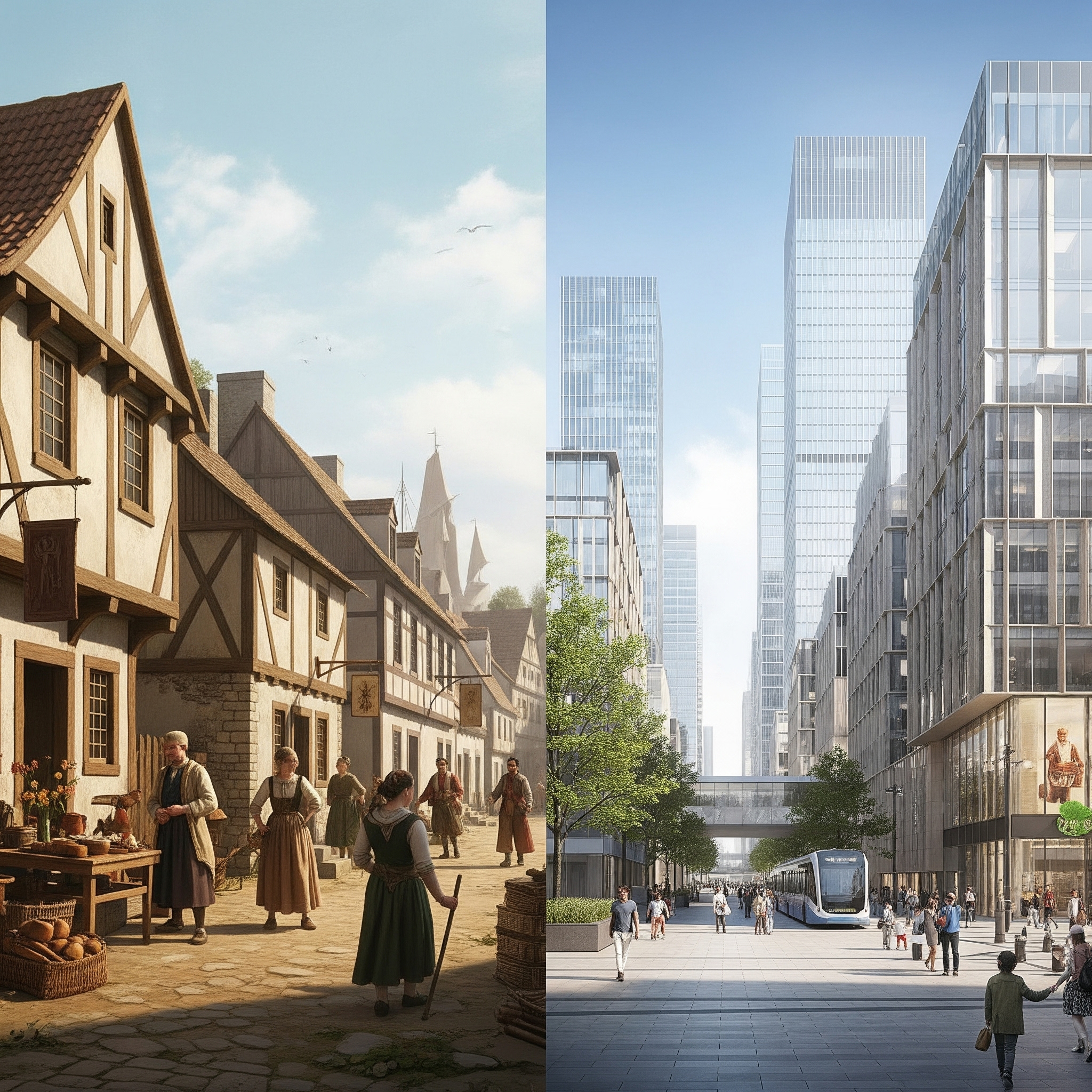
    Another notable trend in the real estate market is the rise of mixed-use developments. These projects integrate residential, commercial, and recreational spaces into a single area, fostering a sense of community and convenience.

    Benefits of Mixed-Use Living

    Mixed-use developments cater to the modern consumer’s desire for walkability and accessibility. As urban populations grow, residents increasingly seek neighborhoods where they can live, work, and play without the need for extensive commuting. This trend is particularly evident in metropolitan areas where traffic congestion and long commutes have become significant concerns.

    Case Studies: Successful Mixed-Use Projects

    Cities such as New York, San Francisco, Miami, and Toronto have seen a surge in mixed-use developments. For instance, the Hudson Yards project in New York City exemplifies how integrating residential, commercial, and public spaces can create a vibrant community hub. Such developments not only attract residents but also enhance local economies by fostering business growth and increasing foot traffic.

    The Influence of Smart Home Technology

    As technology continues to evolve, smart home innovations are becoming increasingly prevalent in the real estate market. Homebuyers are now looking for properties equipped with smart technologies that enhance convenience, security, and energy efficiency.

    Features of Smart Homes

    Smart home technology encompasses devices such as smart thermostats, security systems, lighting controls, and home automation systems that can be remotely managed via smartphones. According to a report by the Consumer Technology Association, nearly 75% of U.S. households own at least one smart home device, indicating a growing consumer preference for tech-enhanced living environments.

    Implications for Real Estate

    For real estate developers, incorporating smart technology into new constructions can significantly increase property value and appeal to tech-savvy buyers. As demand for such features rises, properties equipped with smart technology are likely to command higher prices and attract a broader range of prospective buyers.

    Demographic Shifts and Urbanization

    Demographic trends, particularly the movement of millennials and Gen Z into urban areas, are reshaping the real estate market. Younger generations prioritize experiences over ownership, leading to increased demand for rental properties and smaller living spaces that offer flexibility and access to urban amenities.

    The Impact of Remote Work

    The COVID-19 pandemic has accelerated the shift towards remote work, prompting many individuals to reconsider their living arrangements. With the ability to work from anywhere, some are opting for suburban or rural living, seeking larger homes at lower costs. However, urban centers remain attractive due to their rich cultural offerings, diverse job opportunities, and strong social connectivity.

    Housing Affordability Challenges

    As urban areas continue to experience population growth, housing affordability has become a pressing issue. Many cities are grappling with how to provide affordable housing options while maintaining the character and vibrancy of their neighborhoods. Policymakers and developers are tasked with creating solutions that effectively address both supply and demand.

    Conclusion

    The real estate market is witnessing a profound evolution shaped by sustainability, technological advancements, and demographic shifts. The trends toward sustainable development, mixed-use living, and smart home technology reflect the changing preferences of urban dwellers, who seek convenience and a high quality of life. As these trends continue to develop, stakeholders in the real estate market must adapt their strategies to meet the demands of a new generation of homeowners and renters, ensuring that urban living remains accessible, attractive, and sustainable.

    Sources:
    IoT | Sieze Today. https://siezetoday.com/tag/iot/

    The Future of Composite Materials in Aerospace Industry: Emerging Trends and Innovations – SMI Composites. https://www.smicomposites.com/the-future-of-composite-materials-in-aerospace-industry-emerging-trends-and-innovations/
    Rebecca Wyatt – PARCEL Industry. https://parcelindustry.com/by-author-1507-1.html
    Sustainable Urban Planning: Building Livable Cities for the Future – Geeklybee. https://www.geeklybee.com/sustainable-urban-planning/
    Cao, Y., Song, X., & Wang, T. (2015). Development of an Energy-Aware Intelligent Facility Management System for Campus Facilities. Procedia Engineering. https://doi.org/10.1016/j.proeng.2015.08.446
    U.S. Green Building Council Announces Recipients of 2023 LEED Homes Awards | Weber Thompson. https://www.weberthompson.com/u-s-green-building-council-announces-recipients-of-2023-leed-homes-awards/
    Building Inclusive Cities: A Vision for Accessible and Equitable Urban Development. https://reflections.live/articles/18210/building-inclusive-cities-a-vision-for-accessible-and-equitable-urban-development-article-by-kamakshi-srimal-18923-m3stdvxe.html
    Canadian study finds banned cancer-causing chemicals in 88% of household products. https://health.news/2023-04-26-carcinogens-found-in-88percent-of-household-products.html
    The Current Real Estate Market Trends | CCW Photos. https://ccwphotos.com/29781-the-current-real-estate-market-trends-20/
    9 Trends Defining the Future of Luxury Homes – Luxarc. https://www.luxarc.in/blogs/news/9-trends-defining-the-future-of-luxury-homes
    Transform Your Space: Exploring the Latest Home Decor Trends of 2023 -. https://advantage1mtg.com/3452/transform-your-space-exploring-the-latest-home-decor-trends-of-2023
    Top 7 Features of Smart Homes Creating Trends in Real Estate | Elliot Adler. https://elliotadler.bravesites.com/entries/general/Top-7-Features-of-Smart-Homes-Creating-Trends-in-Real-Estate
    Nine Home Improvements to Modernize a Fixer-Upper – Merriment Maker by Uncustomary. https://uncustomary.org/nine-home-improvements-to-modernize-a-fixer-upper/
    Advanced Television | Tag Archive | nextgen. https://advanced-television.com/tag/nextgen/
    Why Build a Private Guest House on Your Property?. https://eastonhomes.com/blog/why-build-private-guest-house/
    (2023). Recognizing Excellence: Women in Secured Finance Profiles. The Secured Lender, 79(2), 14-16,18.
    Techsalerator. https://www.techsalerator.com/use-cases/urban-planning-and-infrastructure-development
    Technology Trends Transforming Freight Operations. https://www.technologytimesnow.com/technology-trends-transforming-freight-operations/

  • How Developer Margin Compression Actually Works — And Why In-House Construction Is the Only Real Defense

    How Developer Margin Compression Actually Works — And Why In-House Construction Is the Only Real Defense

    Every real estate developer is dealing with developer margin compression right now. Interest rates that reprice quarterly. Construction materials 35–40% more expensive than they were in 2020. Labor shortages that turn a five-week framing job into an eight-week framing job. Insurance premiums that keep drifting up. And all of that sits on top of land basis that hasn’t come down.

    If you’re an investor evaluating real estate opportunities in 2026, this is the environment your sponsor is operating in. The question is: who’s better positioned to survive it — and to protect your returns while doing so?

    What developer margin compression actually looks like

    According to the McKinsey Global Institute’s Reinventing Construction research, the average large construction project runs 16% over budget and 20% over schedule. For a developer with tight underwriting, those percentages come directly out of investor equity. For a developer with loose underwriting, they come out of investor and sponsor equity — but only after the sponsor has already collected fees.

    Now stack the environmental pressures on top of that industry baseline. According to CoreLogic’s Construction Cost Index and BLS JOLTS data, non-residential construction inputs are up 35–40% since 2020. There are more than 650,000 unfilled construction jobs in the U.S. Permitting timelines in Florida’s premium coastal submarkets — where we build — run 8 to 18 months. Every one of those factors expands the gap between a proforma’s Day-One assumptions and reality.

    The industry answer to developer margin compression is usually one of three responses:

    1. Cut quality to preserve margin. Bad long-term for buyer demand, resale, and reputation.
    2. Raise prices to preserve margin. Works only until it prices out the target buyer.
    3. Cut yourself a wider fee to preserve your margin while the project’s return profile deteriorates. Not investor-aligned.

    None of these actually solve the problem for the LP.

    The real answer to developer margin compression: eliminate the GC layer

    Most real estate developers are not builders. They find land, raise capital, hire architects, secure permits, and then hand construction to a third-party general contractor. The GC hires subcontractors, manages the site, and delivers the finished product. That structure works fine in a low-inflation environment. In a compression environment, it becomes very expensive.

    Here’s the math a lot of investors don’t see:

    • GC markup: typically 15–20% on top of actual construction cost. On a $12M build, that’s $1.8M–$2.4M.
    • Change orders: average 8–10% of budget on a project of this size. On a $12M build, that’s another $960K–$1.2M.
    • Schedule overrun: the McKinsey 20% average, applied to carrying costs, adds another $200K–$400K depending on financing structure.

    Total unnecessary drag on a $12M build routed through a third-party GC: roughly $3M–$4M.

    That $3M+ is not “developer profit” or “investor return” or “sponsor promote” — it’s simply value the project never realizes because two entities with different incentives were operating on the same project.

    Why Lana operates as its own GC

    Lana Development is a licensed general contractor. We build every project we develop. Our construction team has managed projects valued up to $160 million. There is no third-party markup layer. There is no misalignment between the developer and the builder — because they’re the same team. Cost overruns are managed in real time by the same people underwriting the project’s returns. Change orders are rare and small because the design team and the build team never disagree with each other about scope.

    This is not a theoretical claim. Turquoise Homes on 30A — 66 luxury single-family lots delivered on 30 acres — was executed through the peak of the 2020–2023 cost-inflation window. In-house construction kept cost discipline. The project delivered $30 million in net profit on $7 million of equity in 3 years: a 5.29x equity multiple and 74.2% annualized IRR on invested capital. That result is not luck. It’s what happens when the developer and the builder are the same entity in the exact moment of the cycle when developer margin compression is most acute.

    Five questions every investor should ask about developer margin compression

    Regardless of whether you invest with Lana, if you’re evaluating a real estate opportunity in 2026, insist on answers to these five questions before you commit capital:

    1. Who is your general contractor — and how is their fee structured?
    2. What’s your final-cost-vs-original-proforma track record on the last five projects?
    3. How do you handle cost overruns — and who absorbs them?
    4. What construction reporting will I receive during the build?
    5. Are you co-investing your own capital in this project?

    A sponsor who can answer those five with real specificity has already earned a significant amount of your trust. A sponsor who can’t should not be trusted with your capital in a margin-compression environment.

    The bottom line on developer margin compression

    Developer margin compression is real, and it’s not going away. Developers who outsource construction will feel it, absorb it, and pass it through to their investors. Developers who build in-house will absorb it too — but they’ll absorb far less of it, and their investors will feel almost none of it.

    That structural difference is the single biggest thing to underwrite when you evaluate a real estate sponsor right now.

    Interested in how this plays out in a specific deal? Schedule a 15-minute call with Luis Noronha or review the Coastal Living Collection.